Removal
Generator decommissioning checklist for facility managers
From pulling records and notifying your air agency to lockout, draining fluids, rigging and closeout paperwork, here's the full sequence.
· 8 min read
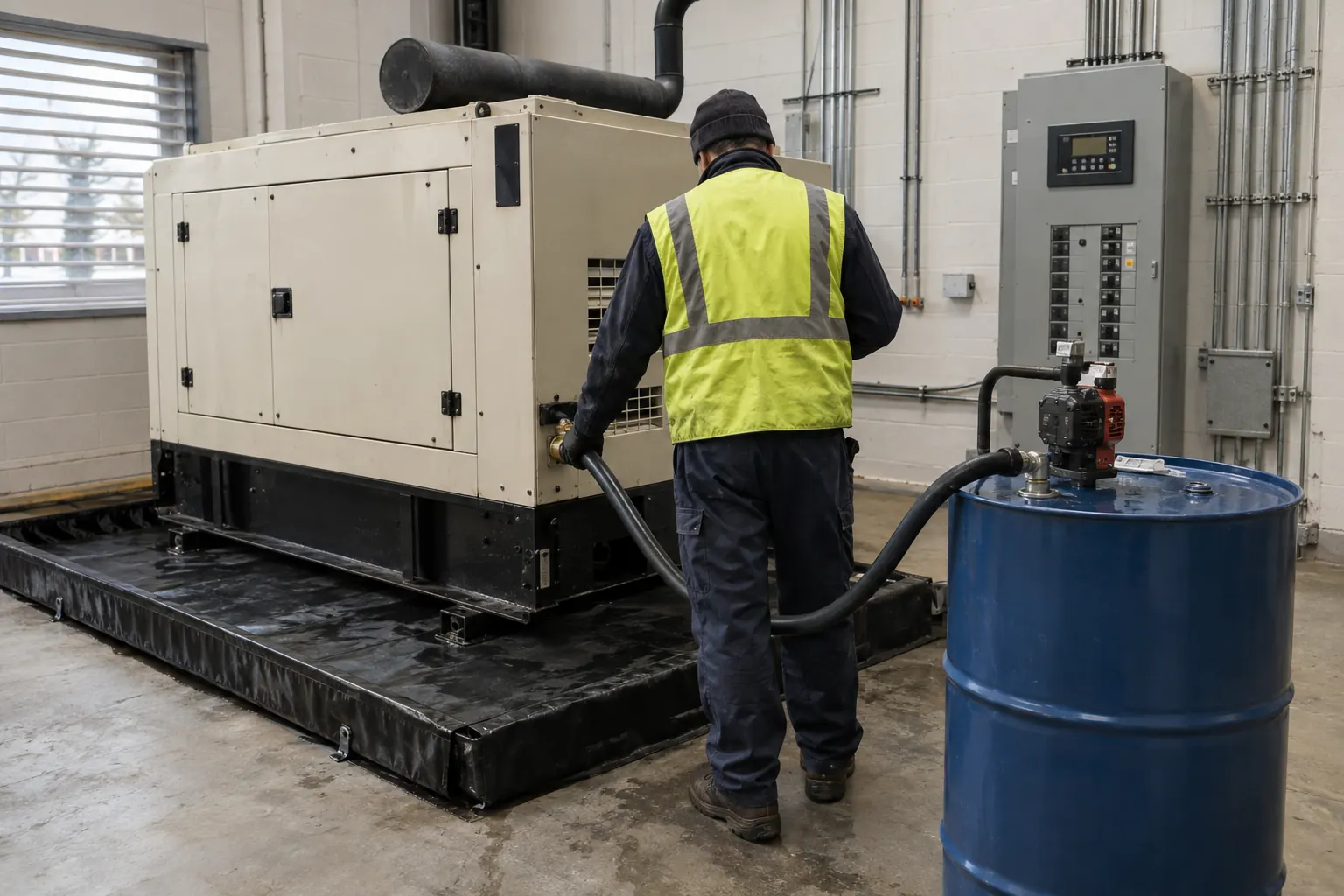
Pulling a standby generator out of service involves electrical, mechanical, environmental and paperwork steps, and the order matters. This checklist covers the typical sequence for a commercial or industrial diesel unit. Your site, utility and local authorities may add requirements, so treat this as a starting framework rather than a substitute for your own safety and permitting review.
Before the project
- Confirm replacement or alternate power. If the building still needs backup power, plan the cutover so there's no gap in coverage, or arrange a temporary rental unit.
- Pull the records. Gather the nameplate data, hour readings, maintenance logs and any load bank reports. Federal rules require owners of many stationary emergency engines to keep operating and maintenance records (EPA stationary engine compliance requirements), and those same records support resale value.
- Check your air permit. If the generator is listed on a state or local air permit, ask your air agency how to remove or amend it once the unit is gone.
- Decide sell, reuse or scrap. Get a written offer before you schedule demolition. A unit that will be resold is handled differently from one that's going to a scrap yard.
- Survey the access route. Measure doors, corridors and clearances. Note the roof or floor loading, crane placement options, overhead lines and whether a street or sidewalk permit is needed.
Electrical and fuel disconnection
- Lockout/tagout. A licensed electrician should isolate the generator from the building, the transfer switch and any paralleling gear, using your site's lockout/tagout procedure.
- Disconnect controls and batteries. Remove the starting batteries and disconnect remote annunciators, battery chargers, block heaters and monitoring.
- Isolate the fuel. Close and cap fuel supply and return lines. For natural gas units, the gas service must be shut off and capped by qualified personnel.
- Decide on the ATS. Determine whether the transfer switch is coming out with the unit or staying for a future generator.
Fluids
- Diesel fuel. Pump down sub-base or day tanks. Clean fuel can sometimes be transferred to another tank on site, which is worth asking about before it's hauled away.
- Engine oil. Drain it into containers that are in good condition and clearly labeled "Used Oil." Federal rules require used oil to be shipped only with transporters that have an EPA identification number (40 CFR Part 279, Subpart C; EPA used oil FAQ for businesses).
- Coolant. Drain antifreeze and send it to a recycler. Never pour it down a drain.
- Batteries. Lead-acid starting batteries go to a battery recycler.
Rigging and transport
- Lift plan. For crane lifts, the rigging contractor should prepare a lift plan that covers unit weight, pick points, crane size and setup location.
- Separation. Large units may need the enclosure, radiator or tank separated before lifting.
- Load securement. Make sure the transport is rated for the weight and dimensions, and that the load is properly secured. Oversize loads need permits.
Closeout
- Get a signed bill of sale or a recycling receipt for the unit.
- Keep the fluid disposal and transport paperwork with your environmental records.
- Update your air permit, asset register, insurance schedule and preventive maintenance contracts.
- Photograph the empty pad or room for your files.
Want help with the whole sequence?
We can build removal into a purchase offer. That covers coordinating disconnection, fluid handling, rigging and freight, with the scope written down before anything is scheduled. See how generator removal works or request a removal plan.